4 Reasons You should Re-consider Writing a Spec Script about
the Pandemic.
Write what you know is one of the best pieces of advice a
professional screenwriter (or someone working to become one) will ever hear
about the craft. Which is why this pandemic turning our world upside down would
tempt any screenwriter to believe this could be the subject of their next writing
project. In one way or another, we've all been touched by this crisis,
therefore isn't the experience enough to begin writing?
I've been a professional screenwriter and producer for over
twenty years and have travelled down this road many times before working on
projects "ripped from the headlines." Though I admit, this present
crisis is like no other previous event in modern times, I still offer my caveat
to those thinking the pandemic might lead to writing a great script that will
change your career. At the very least, any writer contemplating going in this
direction should definitely manage their expectations.
Here are 4 Reasons one should consider before writing a
script on the Virus Pandemic:
1 Sometimes an event in the media is so traumatic that it
takes many years before people become comfortable enough to experience it as
"entertainment."
There is no doubt that the Corona Virus Pandemic is a huge
event, impacting everyone in the United States and the world. One can also
assume that something so life changing will take an emotional toll on many
people. Consider this emotional impact when contemplating whether to write
about this subject, hoping your finished work will quickly become produced.
Will a sizeable audience be waiting to take in as "entertainment"
something that still might be raw after their 24/7 experience for months? It
might not even be the question of trauma; it might be more like - the last
thing I want to think about for a while is the Corona Virus. The question that
probably can't be answered right now is when will audiences be ready? It could
be years from now.
2 To avoid a narrative that is creatively exploitative,
simplistic, even inaccurate, the writer on a current event may need
perspective, sometimes achieved only with the passing of time.
Today's technology allows most of us to see stories on TV or
over the Internet about the pandemic. And the stories being shared showcase
people directly involved in this crisis. This media exposure and access has led
to the pandemic being covered in a way like no other event in history. The
Internet, smart TVs, mobile phones, and apps like zoom, have given so many
people across the nation the opportunity to feel connected with what's
happening all around them. Across the world, and down the street, it's now
possible to watch what's happening in a visceral and impactful way.
As a creative artist, how do you create entertainment about
this event that will somehow be better, more impactful than the experience
described above. How does one carve out a story that deserves to be told in a
screenplay or TV series that will be profoundly different from the daily
barrage of media covering the crisis? Can it be done?
The initial reaction to writing a movie or TV series about
the Vietnam war suggests that perhaps it's a nearly impossible task to write
about a current event artfully while in the middle of the event itself.
Our country's involvement in the Vietnam war began around
1964 and ended in 1975 with the final, chaotic evacuation of our troops from
Saigon. During these years, TV news came of age when their coverage of the war
helped sway public sentiment to demand the government end our involvement in
the conflict. During this same time, the few theatrical films dealing directly
with the Vietnam war failed to have a similar impact on the country. There were
a few war movies released that ended up being influential, but they were about
different wars, like "M*A*S*H" (set during the Korean War) and
"Patton," (set during World War Two), with their creative content
heavily influenced by the ongoing conflict in Vietnam.
It would take over four years after the official end of the
Vietnam war before the release of what is arguably the best movie about our
Vietnam experience. "Apocalypse Now" was critically acclaimed and
nominated for best picture in 1979, and its reputation as a masterpiece of
filmmaking has only increased with time. Though the film has moments of a
"documentary" look and feel, mostly Francis Ford Coppola's vision is
an artful approach, with scenes that are surreal, poetic, or a hyper version of
gritty reality. There is no question that if Coppola had somehow begun
production while the country was still in the middle of fighting the war, the
result would be a much different movie.

"Apocalypse Now" would go on to lose the best
picture Oscar to "Kramer vs. Kramer." The latter film was a
well-acted, solid production about the changing societal mores involving
divorce and child care. Unfortunately, when viewed today, "Kramer vs.
Kramer" comes off as trite and dated, an artifact from a specific place in
time, rather than the timeless masterpiece "Apocalypse Now" has
become. I believe part of the reason for my assessment is that "Kramer vs.
Kramer" was produced to be a cutting-edge examination of societal change
close to the time it was actually happening.
3 The best narrative movie or TV series based on a
current event may take some time to emerge.
This can occur for several reasons. Sometimes a more
"personal" aspect of a larger event emerges later. This will happen
when a real person (or group of people) and their experience finally surfaces,
and is shared with creative people, leading to a movie or TV production.
Sometimes the story worth telling about an event can't be
told for various reasons, whether it's because of government secrecy or to
protect the people who would be in danger if the truth were to surface.
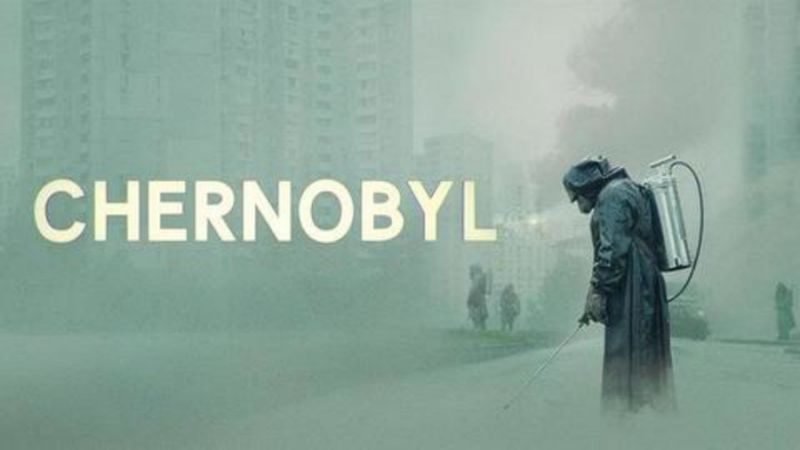
Government restrictions probably made the brilliant HBO mini-series,
"Chernobyl," an impossible story to tell in an unflinching and
truthful way until almost 40 years after the event.
4 A project about the pandemic is not what the studios or
networks are currently producing.
My final cautionary note is about the bottom line. And when
we're talking about the Entertainment Industry, one should always be aware of
the bottom line for those who green light projects - will it make money?

One of the biggest causalities of this pandemic has been the
business of producing and distributing movies. But when the industry does come
back online, it's probably a safe bet that what they will be seeking to produce
will be pretty much where they left off. According to a recent Variety article,
the 1995 movie, "Outbreak," (a film depicting a fictional outbreak
similar to our present pandemic), is "the kind of movie that studios don't
make these days." The author of the article, Brent Lang, goes on to write,
"Even before the pandemic shuttered theaters last month, studios had
abandoned those kinds of brainy, modestly budgeted offerings in favor of comic
book adaptations designed for teenagers." So this final heads up to those
considering the pandemic spec script or TV series - know that you might be
writing a project that no one will actually be looking for when the industry
goes back to work. At least not immediately.
For the record, here's how I'm spending all my hours in
quarantine - taking a lot of notes about what people are going through during
this crisis, hoping the details end up informing my work on a genre script and
a novel, neither of which has anything to do with the pandemic. If I do my job
right, what I end up writing won't remind the reader of any specific event
they've recently endured but seeks to play off the fear and anxiety that has
perhaps become a part of their permanent state of mind.